What to expect with adoptee-centered support
With adoptee-centered support you can expect to feel seen, heard, and validated in your experience as a transracial adoptee.
Many of us learned to people please, which is really self abandoning. You may be highly functional by every outside measure, the one who excels at work, the “super supportive” friend, the overachiever, while quietly putting your own needs last.
When something good happens there can be a barrier, a guilt you have never been able to name. You have been told your whole life that you have it all, and you still feel a void you cannot reach or articulate.
In your relationships you may lean anxious, avoidant, or both, feeling stuck and looking for a way through to something more secure.
Together we build what we were never taught. How to self advocate. How to set a boundary and hold it. Self worth that isn’t contingent on performing. You’ll process your adoption in an affirming space and build the foundation you always needed, in a way that centers you.
Every adoption begins with grief and loss.
Maternal separation lays the blueprint for our attachment programming.
Adoption is trauma, despite what society has led us to believe.
How we see ourselves, and how others see us.
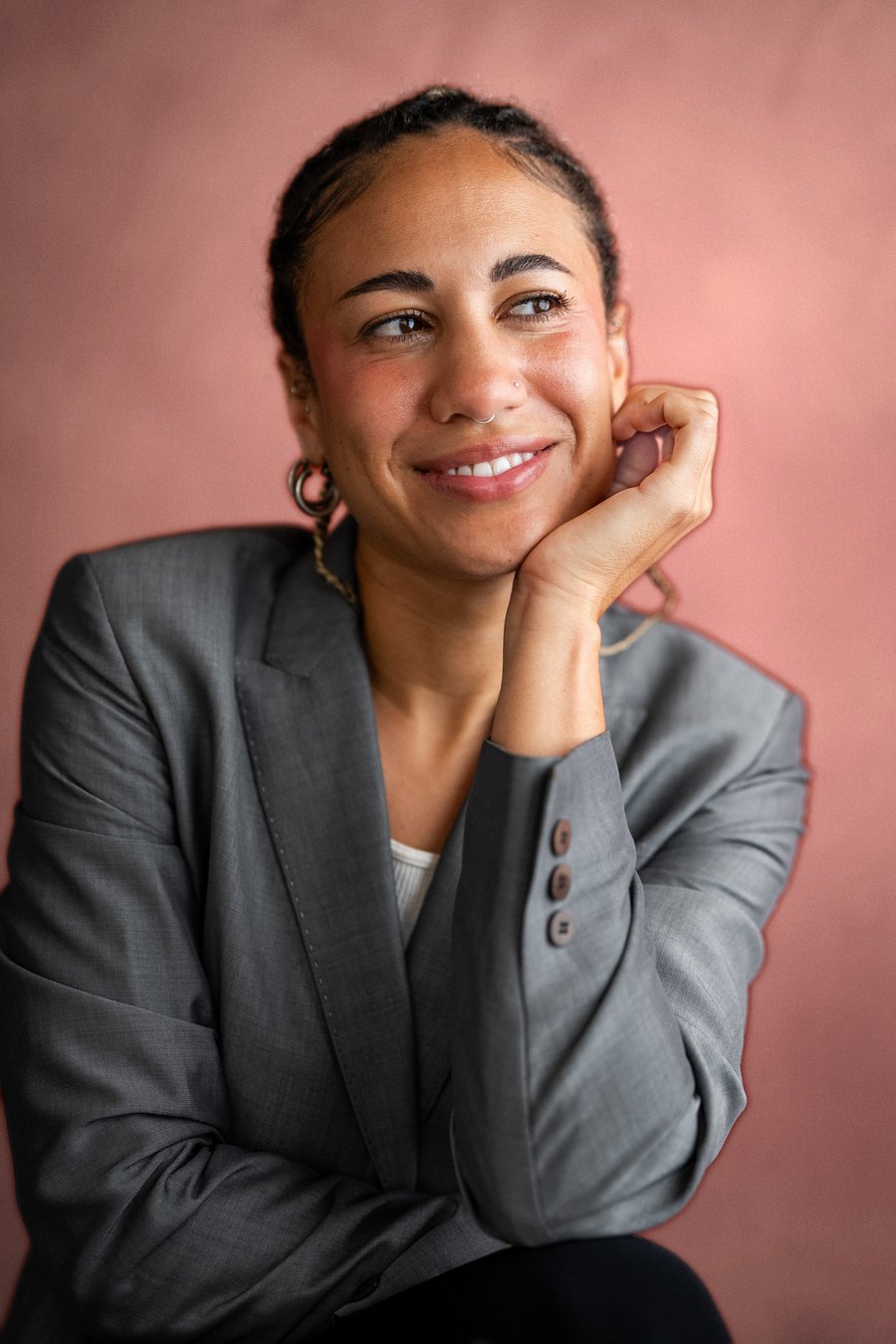
You might see parts of your story reflected in mine
Whether you’re a transracial adoptee, a same-race adoptee, someone who identifies as a Black or brown person of the global majority, or you’re adopted and raised in predominantly White spaces, I’m here to support you.
You may be feeling the symptoms of ‘coming out of the fog’, as they say, and are unsure how to balance such duality surrounding your feelings related to your adoption story. Maybe you grew up with more privilege than you were told your biological family had, and you were always told “you’re so lucky to be adopted!” You might be navigating familial estrangement to varying degrees and you’re seeking support from someone who understands.
If any of this resonates with you, you are in the right place.
Therapy and coaching are two different things
A licensed healthcare service.
Washington State only. You need to be physically located here during sessions, because mental health licences are granted state by state.
Not therapy, and not a healthcare service.
Available anywhere. Coaching is not tied to your location.
You do not have to arrive knowing which one you are looking for. Sorting that out is what the free call is for.
Things people ask before they book
Do you take insurance?
No, I do not take insurance at this time for a variety of reasons I am happy to elaborate on during our initial consultation call.
However, if your plan has out-of-network benefits, I can give you a superbill to submit yourself for potential partial or full reimbursement. It is worth calling your insurance company to inquire.
I also recognize that access to this kind of support can be genuinely difficult for us as a marginalized population. If cost is a barrier for you, please inquire about sliding scale options.
What does it cost, and can I get an estimate up front?
Sessions are $250 for 55 minutes. Packages are three for $750, six for $1,500, and ten for $2,500, all at the same per session rate. Packages expire one year after purchase.
Is it too late? I have been out of the fog for years.
No, and there is no schedule you have fallen behind on. Adoption is something that affects you throughout your lifespan. Different generations also handled adoption differently making it incredibly difficult to talk about or even imagine seeking support or understanding.
Whenever you begin is the time you’re supposed to begin. You are never too young or too old to receive validation, love, and intentional support.
Do you only work with transracial adoptees?
No. I work with all adoptees, and with anyone invested in supporting and centering adoptees, whether or not you are adopted yourself. If you are part of the adoption constellation, you are welcome here.
Transracial adoptees are who I know best, because it is my own experience. The separation, the attachment rupture, and the grief are shared ground. If I am not the right fit for what you are carrying, I will say so on the consult and point you somewhere better.
What actually happens on the free call?
Fifteen minutes, no intake forms, no paperwork. You say as much or as little as you want about why you reached out. I answer questions. We work out whether this is the right room, whether therapy or coaching fits, and where you will be located.
Nobody is assessed or diagnosed on that call, and nothing is decided that you did not decide. If it is not a fit, I will help you figure out where to look next.